Whitley Penn Talks: Our Friends Place
Whitley Penn Talks: Our Friends Place
05/07/2026
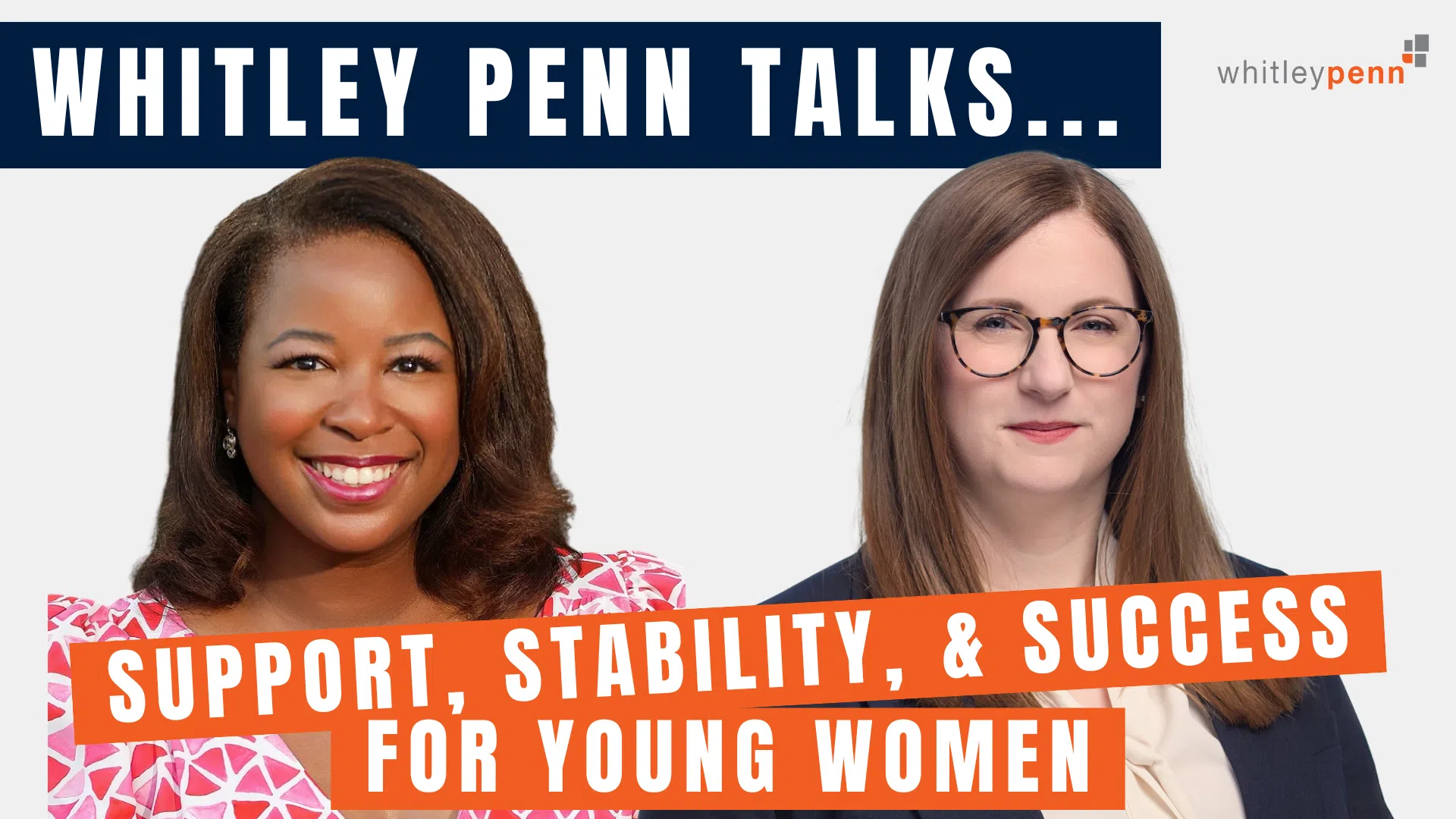
In this episode of Whitley Penn Talks, WPCares series host Emily Landry speaks with Helena L. Banks, CEO of Our Friends Place, about empowering young women experiencing homelessness to build stable, independent futures. The conversation highlights how education, employment, and community support create lasting change. Helena shares the organization’s mission, its residential and SOAR programs, and what empowerment looks like in daily practice.
A powerful story brings the impact to life, showing how consistent support can help young women move toward true independence. The episode is both inspiring and grounded in real impact.
Key Takeaways:
- How Our Friends Place supports young women through education, work, and essential life skills
- Why small, daily decisions play an important role in long‑term stability
- A real story of resilience that shows what empowerment looks like in practice
- How youth homelessness often looks different than people expect
Listen to this episode on Spotify or Apple Podcasts. Click here to view the episode transcript.
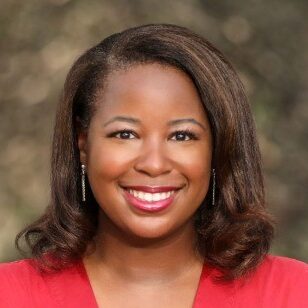
Helena L. Banks
CEO, Our Friends Place
05/07/2026
In this episode of Whitley Penn Talks, WPCares series host Emily Landry speaks with Helena L. Banks, CEO of Our Friends Place, about empowering young women experiencing homelessness to build stable, independent futures. The conversation highlights how education, employment, and community support create lasting change. Helena shares the organization’s mission, its residential and SOAR programs, and what empowerment looks like in daily practice.
A powerful story brings the impact to life, showing how consistent support can help young women move toward true independence. The episode is both inspiring and grounded in real impact.
Key Takeaways:
- How Our Friends Place supports young women through education, work, and essential life skills
- Why small, daily decisions play an important role in long‑term stability
- A real story of resilience that shows what empowerment looks like in practice
- How youth homelessness often looks different than people expect
Listen to this episode on Spotify or Apple Podcasts. Click here to view the episode transcript.



Get new episodes straight to your inbox
Get new episodes straight to your inbox
You might also enjoy...
Episode Transcript
Emily Landry (00:00)
Hello everyone. Welcome to Whitley Penn Talks, where we give you valuable insights to help you make confident, informed decisions and move your business forward. My name is Emily Landry, host of our WP CARES episode series. And today we are joined by an amazing guest from our fourth highlighted Whitley Penn Philanthropic Fund recipient. For those who don’t know, the mission of our fund is to cultivate a legacy of generosity amongst Whitley Penn partners and employees for community impact.
We support local initiatives, empower underserved populations, and foster sustainable growth in our neighborhoods. Today I am sitting down with Helena Banks, CEO of Our Friends Place. Welcome.
Helena L. Banks (01:12)
Thank you so much Emily, I’m so grateful to be here today.
Emily Landry (01:16)
I’m so glad that you’re joining me. So we have already had a blast talking before we started recording. So I am ⁓ very excited for our time today. And I think we’re going to have a great time together, but I want to know a little bit more about the organization and the mission you have for young women. Can you tell me more about that?
Helena L. Banks (01:44)
Well, we’re so grateful to be here and to have the support of Whitley Penn. And the fact of the matter is Our Friend’s Place exists to empower young women. That is, you know, we have a mission statement and a vision statement, but at the end of the day, our work is to empower young women. And that is what we do. And we do that through two programs. We have our residential and our non-residential programs.
Our residential program is where we house young women ages 18 to 24 who are experiencing homelessness. We own two transitional living centers where we empower those young women to make the best decisions for their lives so that they can go on to not just be successful in life for themselves, but for themselves, their families, and the community. Our non-residential program is a great program called Soar to Success.
And that’s where we take the life skills and the building blocks that we have in our residential facility. And we take those out into schools and aftercare programs all throughout Dallas County. And right now we’re in over 33 partner agencies, afterschool programs, high schools, middle schools, where we deliver those life skills programs. So at the end of the day, we are empowering youth. We’re empowering young women so that we can live up to our mission to end youth homes.
Emily Landry (03:10)
33 partner agencies is no joke. Do you have time to sleep?
Helena L. Banks (03:17)
Well, the great news is that I do not do this alone and in everything that we do, we do it in community. So there’s a team of wonderful people who are out there and about who are delivering this message and delivering these critical life skills to the youth in Dallas County. And it’s probably for the best. They’re younger and much more hipper than I am. And so, you know, when you talk to youth, you got to talk to them in the language that they know. And I’m not really good at it, but I will tell you for certain that our two SOAR coordinators are dynamic at delivering this message and they will tell you that they’re good at it, period.
Emily Landry (03:52)
My brother teaches sixth, seventh, and eighth graders and I will text him, I don’t know what this means and I’m scared to look it up.
Helena L. Banks (03:59)
Yes, so that’s the only reason I know to go period because that means it’s because our our SOAR team told me to.
Emily Landry (04:05)
I love it!
That’s incredible. So what inspired your journey to become CEO of Our Friends Place?
Helena L. Banks (04:17)
Well, it’s interesting you ask because as with most things in the world, I did it because of a friend. A friend came to me. I’ve been in the nonprofit sector for many years, over 20 years now. And a friend that I knew from another nonprofit organization came to me and said, hey, I’m on the board of this organization. I think you should learn more about it. I said, OK.
And I learned more about it. She did what friends do, invited me to some of their events, invited me to the fall gala. And I said, OK, I think I could help. I like what they’re doing. I love the mission of what they’re doing. And so I started as a member of the board. I was on the board for four years. And then when our former executive director announced her retirement two years ago, ⁓ after some soul searching and conversations, I decided to throw my hat in the ring and the board graciously accepted me as the new CEO of Our Friends Place. And I think the most important thing I want people to understand as to why I’m here at Our Friends Place, because at the end of the day, if it were not for my village, if it weren’t for the people and the organizations who supported me on my journey in life, I grew up here in Dallas, was born and raised.
If it wasn’t for that village and that set of resources that I have, I could have been one of our young women who were experiencing homelessness, who’s in our house, in one of our houses. It’s something that could have been me and it should have been me and it would have been me if it wasn’t for the resources that in the village that I was surrounded by. So I’m grateful for that. And this is my opportunity to give back and to also, and to share my experience with others so that they know.
It’s not where you start, it is where you finish. And with ⁓ the help of great organizations like Whitley Penn and our community support, we’re able to provide that village and those resources for young women every day.
Emily Landry (06:20)
I love your story and how, I mean, you haven’t said this, but you are. You’re a successful woman who is pouring back into these young women and you’ve used the word empower so many times and that’s such a powerful word for a reason. I think it’s so beautiful and I know that there, you may not be up on all the hip lingo, but I know they’re grateful for you too. ⁓
Helena L. Banks (06:45)
Thank you very much for that, because it’s so true that, you know, the young women that we serve and the youth that we serve, ⁓ they’ll give you some language that occasionally you’re like, apparently I’m an auntie, and there’s some people just a few years older than me that are grannies. And I’m like, okay. So, ⁓ you know, it’s great that they consider me in the auntie category, at least for now.
My gray hairs might prove us otherwise here shortly, but it’s great to be in the auntie category and for those young people to kind of look up to me and be like, yeah, this is, you you can do it, I can do it too. So thank you for that. I am grateful for this opportunity to share with them and to share with you.
Emily Landry (07:29)
Well, how do you see the organization’s impactful mission coming to life just in the day-to-day work of the team? And then with that, like what does success look like when you’re working towards what feels like such an overwhelmingly systemic issue that we’re facing and not just in our Dallas community, but really throughout all of our regions that we serve?
Helena L. Banks (07:57)
Yeah, so our first place of vision is that there is a world where we are all women are change agents, not just for themselves, but for their families and for their communities. That’s huge, right? Change agents for not just yourself, your family and your community. That is a big vision and a big goal. And you’re right.
You’re like, how on earth do you accomplish that? Well, it starts very small. It starts with small decisions that each young woman, each person makes every single day. So when ⁓ a young woman comes to us and they make the decision that they’re looking for help, the first call they make is that step in the right direction. You know, from there, part of our programming to be in our residential center is that you’re required to go to school, you’re required to work.
You’re required to save, you’re required to go to your group activities, and you’re required to have one-on-one time with your site manager each week. All of those things, that’s a lot, right? Our Friends Place is not just a place for you to lay your head. It is a place for you to gain those life skills and gain those resources each and every day. So every day when a young person takes one of those steps, every day when a young person gets that job, when they keep their job, when they advocate for themselves to get a raise at their job, when they ⁓ succeeded school or they finally save enough money for their car, every day, that’s one of those very small steps. So when people ask, how do you accomplish this really big mission? How do you accomplish this really big vision? It’s just small steps. Keep taking a step forward and every day we accomplish that mission because again, one young person making a great decision is how our world changes every day.
Emily Landry (09:51)
You never know what that one young woman is going to do and who she’s going to impact and how many lives are going to be changed by her.
Helena L. Banks (10:01)
Absolutely, absolutely.
Emily Landry (10:03)
So how do you identify and support young women who are at risk of facing either homelessness or instability?
Helena L. Banks (10:11)
Yes, so our friend’s place has continuously operated since 1987. So this is 38 years of never closing our doors to our young women. With that, most of the people who come to us come to us because they know a friend who’s either gone through our program or who’s heard about our program, or we’ve been referred to them by another referral agency. After 38 years, a few people know our program and they know kind of the requirements of our program. And so usually a referral agency ⁓ or another friend sends a young person, a young woman to our agency who knows, they kind of know what we are, what ⁓ that young person’s looking for. They know that they’re maybe ready to take this type of step to be in a transitional living program. And with that, they come to us with kind of an idea of, okay, something isn’t going to be required of me.
I think I’m ready to go to school and go to work. And again, our magic word here is empowered. Every young person, whatever their circumstances are, they might not be ready to go to work and go to school, right? That’s a lot, okay? You have to do one full-time and one part-time in our program. So if we have a young person who’s like, I just really wanna work. I don’t really wanna go to school right now. That’s terrific as well. We’re just not the program from you and we’re gonna refer you to another agency that that might be their requirement.
But for us, we require both school and work because we know that you have to work, right? Everyone has to go to work every day to pay your bills. But we know that the pathway out of poverty is through education because that’s how you advance in your career, ⁓ regardless of what your career is. So part of our program and part of the foundation of what we do requires those young women to go to work and go to school. So when a young woman who might be experiencing homelessness comes to us and they’re at the point where they’re ready to make that decision that I want to do this. I want to work. I want to go to school. ⁓ They come to us and we’re going to give them the resources and all the support that they need so that they can be successful in whatever their goal is. It’s not what we decide your goal is. They decide what their goals are. So sometimes that goal looks like I want to be an anesthetician. Sometimes it’s I want to go to nursing school. Some want to go into engineering or STEM. Those types of avenues, IT and technology, whatever it is, we’re going to empower them to accomplish those goals.
Emily Landry (12:45)
You’ve used the magic word empower a lot. So I’ll ask a question specific to that next. How do you ensure that the young women you serve feel empowered to take control of their futures and not just support it in the moment?
Helena L. Banks (12:59)
Absolutely, yes, how do we support you, not just in the moment? The first thing is one of our life skills building blocks is goal setting. So just like you set out at whatever point in your life and you said, one day I want to grow up and be X. That is the very basic building block is that we start setting goals. What is it that you’re looking for?
You know, the old saying, can teach a man, you know, you can give a man a fish and leave for a day to teach a man a fish and live forever. The idea is that we’re going to ask you, what is it you want to be five years from now, 10 years from now? And to be honest with you, when young women first come to us, they might not be able to, to, you know, really identify exactly what they’re, that is. So all of our work is based in trauma-informed care.
So when a young woman first comes to us, we can’t go all the way to five years out. We start with their basic needs. We start with understanding where they are. And the other thing we do is we give them what’s called a grace period. And I don’t know about you, but I always can stand to have a little grace, right? So we start with a grace period. And each young woman who comes to us has a certain amount of time, depending on their situation, that they can just breathe. They can take some time. They can get mentally reset. They can get physically reset.
You never know what a young person comes to us with. They may just have a backpack. We take time and we take the resources that we have to get them set up so that they have clothes and food and those sorts of things in addition to the shelter that we’re providing. So we start there. We start by making sure their basic needs are met, making sure they’re in a healthy and safe space and that they understand that this is your time to reset. And then after that, we really talk about what is it that they want. And so we give them kind of the space and time to decide on that, and then we help work through that. The other thing we do, again, magic word and power, is that whatever those goals are, we don’t want our friend’s place to be your only resource. We’re gonna connect you to other people. We’re gonna connect you to other agencies. You wanna go into nursing schools? Well, Dallas College has a wonderful new nursing program that you can go into, and we’re gonna connect you with Dallas College so that when the time comes, you can go, you can advocate for yourself. I want to do X, Y, and Z. I need to fill out this paperwork. We’re going to help you, but we’re going to give you those other resources. And so we know that, you you’re always a friend if you’re a client of our friend’s place, but we want to make sure that we’re not just your only friend, that you have lots and lots of other resources out in the community that can support you as well.
The other thing I will say is even past that point, if a program participant hits a hard time in life, because we always do, it always happens. So as the kids say, sometimes life gets the life in, right? We have what’s called the Sue Thears Heseltine Alumni Fund. So any alumni of our program can always come back to us and say, hey, I hit a hard spot. I did what I’m supposed to do. I budgeted it. I did all these things, but I had an unexpected expense. Is there any way you can help me with this? And we have a program and a fund to fund those needs if and so when that time comes. And so, you’re, you know, once someone is in our program, they’re always with us and we’re always there to support them. And so it’s not just the timeframe that they’re living with us or that they’re actively or that they’re even just within our age range. They’re always available to come back to us. And we have lots of alumni who come back to us to volunteer. They are members of our board. They come and they do new resident orientation for new people who are in our program. So ⁓ your entrance into our friend’s place at whatever your age is just guarantees that you’re going to be with us for life.
Emily Landry (16:54)
A friend forever.
Helena L. Banks (16:55)
A forever friend.
Emily Landry (16:58)
So what trends or changes are you seeing in the needs of young women in Dallas?
Helena L. Banks (17:03)
So our ⁓ outlook on life has shifted tremendously since COVID. And we all know that lots of things changed since COVID. I I don’t know that we were doing very many interviews virtually and things like that since COVID. And so what we have noticed is that in the young people who, in the young women who stay with us, and in the young people that we’re having conversations with, and our afterschool program and the SOAR program, is that the youth really do need more support ⁓ with their mental health and with their social and kind of social capital as well. I never heard the word social capital used so much until recently. ⁓ It’s one of the things that ⁓ is starting to impact not just their personal lives but also their professional lives. ⁓ There was something about being behind a computer screen for many years that has really kind of impacted the way youth are showing up nowadays.
And so when it comes to talking about professionalism and going out into the world and how you go out into the world, ⁓ are you defining it kind of difficult? I mean, it’s kind of a lot and those social skills and those social interactions, ⁓ it requires practice, it requires work. I don’t know very many people who graduated from high school and all of a sudden they were super duper networker and they went to networking events and introduced themselves and shook hands and all of those things.
⁓ Those skills have to be practiced and they have to be honed. And ⁓ I think in addition to those social skills of just kind of being out into the world, the mental health aspect of it is very important. ⁓ It’s just, we’re living in tough times and it’s very easy to get overwhelmed. And so finding those coping mechanisms, finding your therapist, finding, you know, the things that help you be successful and stay grounded in life, our youth are really, ⁓ they really need that additional help and support.
Emily Landry (19:07)
So true. think we’re all learning to be more gentle and loving with ourselves and hopefully with others as well. Post-COVID and just the differences of the way we, you know, for those of us who’ve been around a little longer and maybe are aunties, you know, the way you speak to yourself even matters and those are things I don’t know that we thought about a lot but it’s so much different to text a friend versus call a friend versus FaceTime versus be there in person.
Helena L. Banks (19:34)
Absolutely.
Pick up the phone. Absolutely.
Sometimes you just need a hug. Sometimes you need people to be there for you in a different way. And I will say, the young women that we have in our program are incredibly resilient, right? ⁓ But you don’t always have the space. If you’re trying to figure out work and school and family and this, that, and the other, you don’t always have the space to sit back. And so we do a lot of that. Specifically in our houses, one of the things that is new is we have a yoga instructor. And our wonderful yoga instructor, comes in once a month in each of our houses. And we move all the furniture out the way and the young woman gets to experience yoga. And she does the sound bath and all of those things. And when I look back and hear from the young women, that’s one of the things they enjoy most. Because again, it’s just some time and some space to reset for themselves.
And so we’re grateful to be able to provide that program. And again, those programs, the people who come in for our life skills lessons every week, those are all volunteers. And so ⁓ we’re really grateful to be able to offer, again, just that space to reset and have some time to put your best self forward.
Emily Landry (20:56)
So would you be willing to share a story or a moment that just reminds you of why this work matters so deeply and maybe that you’ve held on to when it’s been easier to be discouraged. Working with so many nonprofits I know y’all can get discouraged when things are not, things are going challenge, being challenging or it’s fundraising season and you feel like my goodness one more donor call after another.
Helena L. Banks (21:26)
Yes. So for me, the good news is in this work, there are more great stories than there are not great stories. But I will be transparent and vulnerable and say there are some days that I’m just like, Lord, why? There’s a book that there’s a saying that says sometimes you’re the dog and sometimes you’re the fire hydrant. And there’s a, and I always kind of say, OK, today you’re the dog, you’re dog, you’re the dog. Right.
But I will share one of our young women who started in our program actually came back to visit with us and share her story. you know, the part about this story is, and I said this earlier, is that our young women are so resilient. And the best part about her story is that when she came to us, she was staying in a hotel and she did her second interview with us and it was decided that she was going to be able to come and join our program. And so they did her second interview, I believe it was on a Friday. And so part of the interview process, and you’re gonna be in our program, and we say, okay, when would you like to move in? And this young woman came, and when the question was asked, she said, I’d like to move in tomorrow. And our site managers were like, well, you know, it’s Saturday, we usually don’t do these on Saturday, there’s paperwork and things like that.
And in that moment, young woman, that young woman advocated for herself. She said, well, Ma’am, you just said to me that part of your program is that you’re supposed to save money and I’m supposed to advocate for myself. So I’m gonna do that. She said every day that I’m staying in this hotel is another dollar that’s out of my savings account. So I would like to move in tomorrow so that I don’t have any more money out of my savings account. And our site manager and the people who were, you know, doing the interview, well, they were impressed by that because that sounds like somebody who’s ready to move in.
And so the site manager said, okay, well, don’t make a fool out of me for, you know, coming to work and doing something on the outside, ⁓ outside of business hours.
So they moved that young woman in. I will tell you that young woman worked. She had something that a lot of us don’t have. She had financial discipline. She saved during her time with us, she saved thousands of dollars. But in addition to her savings, she did her group work. She went to school and she got accepted into a university. That young woman came back to us to share that all those lessons in life and group skills lessons that she attended are paying off because she’s now in college. And more importantly, and I’m going to get the specific subject wrong, but it’s something, it’s biomedical engineering or something that she’s studying, something way smarter than my liberal arts degree ⁓ could ever touch. But she’s in school now. She’s in a dorm room on her college campus studying an amazing STEM skill.
But the other thing that she did when she left our program, and she had saved up enough money that she wanted to take a trip. And she took her first trip out of Texas, and she went to New York City. And not only did she go to New York City, but she went by herself. As a fresh college student, she went by herself to New York City, and she saw shows and she stayed and she took the subway. And it was wonderful. And it’s a great story that she tells us. And when she got ready to tell the story, was like, you don’t cry because I’m not going to cry. But she is not just succeeding. She is thriving in life.
But here’s the kicker. When that young woman is out there in the world and she’s accomplishing these goals and she’s making the deans listen, things like that, she doesn’t have a family to call. She doesn’t have any aunties or anything like that to say, hey, I’m doing this wonderful thing. When she’s making these great decisions and she’s doing great in the world, she calls her site manager to keep her updated on the work that she’s doing. When she was in New York City and she got confused on the subway, she called her site manager. That’s who she called because she knew that that was going to be a resource who was going to be there, who was going to continue to support her on her journey.
We are so grateful. I’m grateful to every staff member that we have. They’re here. They are supportive of our young women. They’re supportive of our youth. They’re keeping up with the fads and all this stuff because I certainly am not. But I’m grateful for our staff for doing that because each and every young woman that they visit with, that they touch, their lives are changed. And it’s not just change for the moment. It’s change for forever.
Emily Landry (26:05)
That’s such a beautiful story. What a wonderful testament to her. There’s many of us who don’t budget, even as full grown adults who have letters behind their name that indicate they should be budgeting.
Helena L. Banks (26:13)
Hahaha
Absolutely, absolutely. And that’s how we know, that’s how I know that every young woman that comes into our program, they are resilient. They are going forward in ways that people who had more aren’t doing. So we’re grateful for that. And I love telling that story because I’m like, I don’t even know what it is. Biomedical something, something, something.
Emily Landry (26:42)
Even if I knew what it was, I probably still wouldn’t grasp what it is. So good job to her and grateful we have people who are gifted with that kind of brain. ⁓ Certainly not me.
Helena L. Banks (26:55)
Not me at all.
Emily Landry (26:58)
So what’s something happening in the local community that you want our listeners to know about?
Helena L. Banks (27:07)
Well, the ⁓ youth homelessness in Dallas County, ⁓ there are homeless studies and things like that, and youth homelessness continues to be on the rise. And I think the most important thing that people can learn about and know about in our community is that youth homelessness does not look like what you imagine. When people think homelessness, it looks like a person on the street or someone on the corner asking for money or someone sleeping under a bridge. And while that is homelessness, it is not exactly the way youth homelessness always presents itself. And so I think our community would be best served if they understand that sometimes youth homelessness looks like couch surfing. It looks like I’m sleeping at my friend’s house today or I’m going to someone’s house today. We’ve had a partnership with Dallas Parks and Rec to help their staff understand what youth homelessness looks like.
Because you have to remember, when you’re a teenager, when you’re 18, when you’re 16 or 17 years old, the one thing you don’t want to do is stick out. And so sometimes just homelessness looks like, well, I’m going to go play basketball at the rec center and then I’m going to shower like everyone else does because you go to the rec center and you shower. Those are the things that happens all the time. And that won’t make me stick out. And so we have had trainings with their staff so they understand that sometimes what are those other kind of indicators that this person might need some additional help. Youth homelessness looks like sometimes sleeping out of their car. You just never really know what the situation is. And I think our community would be best served by understanding that when we address homelessness, we have to address all assets and all facets of homelessness. And again, it’s not just the person you see on the corner, but youth homelessness ⁓ very often presents itself very differently. ⁓
It might be your child’s, if you have children, it might be your child’s friend that, you know, comes over, you know, a little more often than you would imagine. It might be, you know, something that someone said and you’re wondering a little bit more about that. ⁓ It’s those types of things that I think is the more we as a general public can kind of attune our ear to see and to listen. And again, like we talked about earlier, to just, you know, make it an opportunity for some kindness in this world, I think we’d be ⁓ greater served, our community would be greater served by just understanding the full face of homelessness.
Emily Landry (29:38)
So how do you plan to spend the money you received from the philanthropic fund?
Helena L. Banks (29:44)
Well, as I said earlier, we are so grateful to be the recipient, to be a recipient this year ⁓ of the dollars from your philanthropic fund. And I have to give a super shout out to one of our board members or our finance committee member, Kelly Johnson. She is the reason why we were able to receive these funds this year. And we’re so grateful to her volunteer work. I call my finance committee, the Fabulous Functioning Finance Committee. They do such a great job on a volunteer basis for Our Friends Place. ⁓ I want to say that more than 80 % of the dollars that Our Friends Place receives goes directly to client services. And what does that look like? Sometimes that looks like we have to buy new undergarments for young women. Sometimes that looks like ⁓ we don’t have a job yet. That young woman might not have a job yet. And so we’re purchasing food for the young woman.
So the dollars that we receive from you all are going directly to client services and knowing and know that it’s not just impacting one person because anything that we do that can provide budget relief for our young women, sometimes it’s food, sometimes it’s clothing, sometimes it’s bus passes, transportation, getting to a job, that small step again is going to lead to their future. It’s going lead to them being able to provide and sustain for themselves. And for that, we’re grateful.
Emily Landry (31:06)
What’s one final thing you want people to know about Our Friends Place?
Helena L. Banks (31:13)
I think the one thing that I would encourage everyone to do, and I want you to know that it starts here and it starts with you, is to take one step, to take one action today. And it could be something as simple as going to ourfriendsplace.org and looking at our website. It could be something as simple as going on our social media channels, liking, following us and taking just a small two seconds, it doesn’t cost you a dime, to amplify the work that Our Friend’s Place does. The thing that everyone should know is that Our Friend’s Place is here. We are operating and we’re doing a fantastic job. Our staff folks do a job every day that I cannot even imagine impacting in women directly, having conversations directly, sometimes hard conversations, sometimes hard situations.
But they do that every day so that we can change the Dallas community and so that we can change the world. And I invite anyone who is interested in changing the world with us to join us, to volunteer with us, to visit our social media channels, to visit our website, to learn more about us and help amplify the work that we do every day.
Emily Landry (32:35)
Well, thank you so much for joining me today on the podcast.
Helena L. Banks (32:40)
Thank you. It was fun. We had a great time.
Emily Landry (32:43)
We did! For those listening, if you enjoyed today’s episode, be sure to subscribe on YouTube, Spotify, Apple, or listen right on our website at WhitleyPenn.com slash podcasts. Thank you again so much for joining me and I hope everyone has a wonderful rest of your day.