Produced Water in the Permian
A New Asset Class Investors Are Underestimating
April 1, 2026
How can investors drill into an underestimated asset class like produced water? In the Permian, produced water is undergoing a revaluation, and for financial investors, it represents one of the Basin’s most overlooked emerging opportunities. Historically a cost center through injection disposal, produced water is now gaining definition as an investable asset thanks to clearer rules and a renewed state‑level focus on developing new water supplies. In Cactus v. COG (2025), the Texas Supreme Court confirmed that produced water belongs to the mineral lessee unless a contract states otherwise, eliminating a longstanding point of ambiguity and making the asset easier to underwrite, contract, and monetize (Texas Supreme Court, 2025). At the same time, Texas policymakers, most visibly Sen. Charles Perry, are signaling that “new water” is essential to meeting long‑term demand, with proposals for a permanent $1 billion‑per‑year water funding framework that includes non‑traditional sources like treated produced water. Sen. Charles Perry said, “Texas cannot meet its future water needs without new sources like desalination and produced water treatment,” reinforcing the shift toward alternative supplies (Texas Senate News, 2025). For investors, that combination of regulatory clarity and state investment creates a more credible environment for capital deployment.
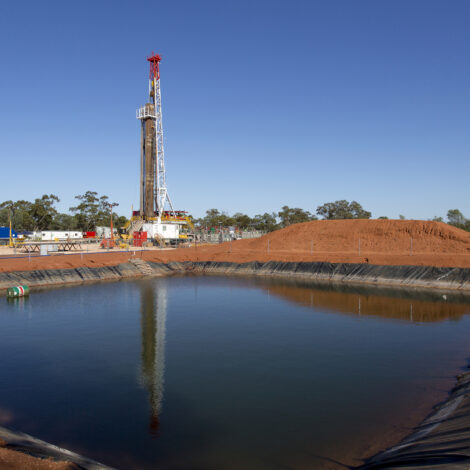
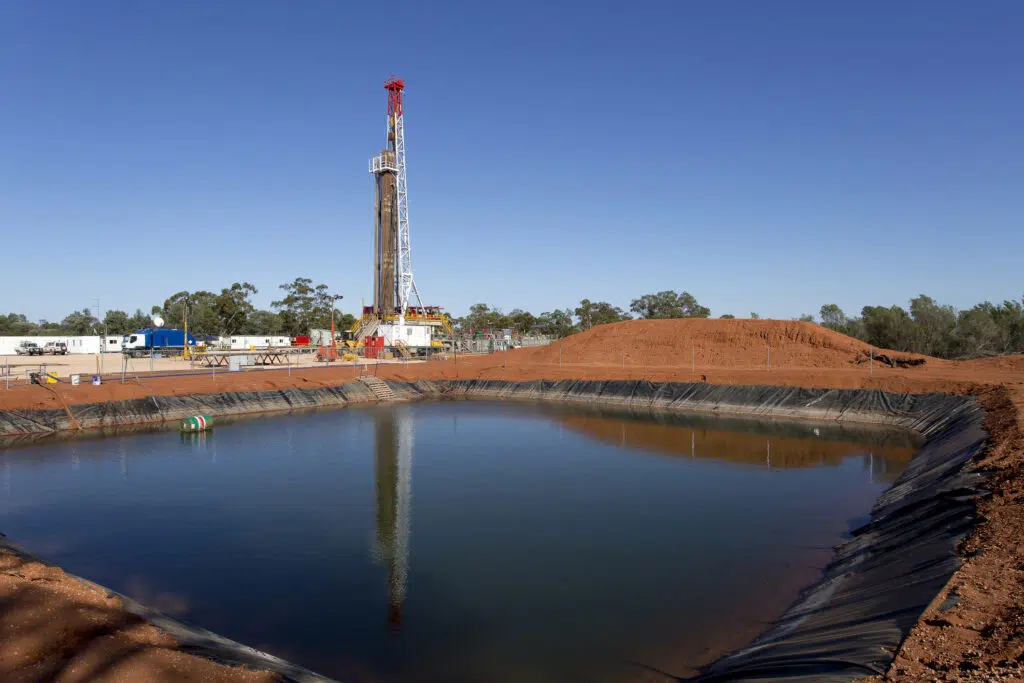
The financial opportunity emerges as produced water shifts from being treated as waste to becoming its own competitive industry. Drawn from every barrel of oil produced and increasing over a well’s life, produced‑water volumes are enormous. They now form a predictable, fee‑generating throughput base. Water midstream companies are already competing for produced‑water rights and building infrastructure footprints much like traditional midstream once did. This has the potential to create stable, contractable cash flows through gathering, treatment, reuse, and eventual industrial offtake. Beyond oilfield recycling, where operators are increasingly using recycled produced water in completions across the basin, demand from non‑oilfield sectors is taking shape. Data‑center operators seeking reliable access to water reserves for cooling, are facing rising water stress and tightening municipal allocations, and are already adopting reclaimed water models such as the Microsoft Quincy project (EPA, 2025) and AWS’s expansion of recycled‑water (Amazon Sustainability, 2025) use nationally. Agriculture and municipal use of treated produced water are also being evaluated. If similar partnerships materialize in Texas, they could introduce long‑term, creditworthy demand curves that align with private‑equity investment horizons.
Produced Water as a Portfolio & Revenue
Stream
The financial opportunity emerges as produced water shifts from being treated as waste to becoming its own competitive industry. Drawn from every barrel of oil produced and increasing over a well’s life, produced‑water volumes are enormous. They now form a predictable, fee‑generating throughput base. Water midstream companies are already competing for produced‑water rights and building infrastructure footprints much like traditional midstream once did. This has the potential to create stable, contractable cash flows through gathering, treatment, reuse, and eventual industrial offtake. Beyond oilfield recycling, where operators are increasingly using recycled produced water in completions across the basin, demand from non‑oilfield sectors is taking shape. Data‑center operators seeking reliable access to water reserves for cooling, are facing rising water stress and tightening municipal allocations, and are already adopting reclaimed water models such as the Microsoft Quincy project (EPA, 2025) and AWS’s expansion of recycled‑water (Amazon Sustainability, 2025) use nationally. Agriculture and municipal use of treated produced water are also being evaluated. If similar partnerships materialize in Texas, they could introduce long‑term, creditworthy demand curves that align with private‑equity investment horizons.
Produced Water as a Portfolio & Revenue
Stream
What makes this most compelling from an investor perspective is that the market imbalance created by disposal constraints is now a real investable opportunity to enter the market and forthcoming submarkets in leveraging produced water as a new revenue stream. Produced‑water disposal, once the cheapest option, is increasingly challenged by pore space capacity limitations, seismicity‑related risk, and higher associated costs. As disposal becomes more expensive and less scalable, recycling and industrial reuse become not just environmentally preferable but economically competitive. That shift opens the door far and beyond water midstream platforms, E&Ps, and infrastructure funds to capture value where others still see risk or complexity. It also creates optionality: from refract‑driven water demand to early‑stage resource extraction opportunities such as lithium recovery, which adds potential upside to otherwise fee‑based assets.
Produced Water & Private Equity
For private‑equity sponsors, the right questions may be less engineering chemistry or treatment technologies and more about identifying new revenue channels or repositioning existing assets for revenue opportunities:
- What are the recurring revenue streams connected with water as an increasingly scarce growth asset?
- What pricing mechanisms capture stable fees, recurring revenue, and optional upside?
- And how might industrial offtake evolve as water scarcity intensifies? What are the things to monitor as this new asset class evolves?
For portfolio companies, the shift often starts with recognizing that produced water is no longer a liability, but a monetizable resource that can strengthen margins and invite new participants and capital. We are at the early stages of an asset class that many believe may have interest from diverse and sophisticated capital sources.
Additional revenue streams may open a path for Funds who may not have traditionally viewed this asset class as within their investment thesis. This may be especially true for Funds with Non-US investors including non-US Sovereign Wealth Funds and other non-US institutional types of investors. With proper planning and structuring, it may be possible for outsized post-tax yields for such investors. Generally, produced water, once produced, is treated as personal property and is not real property under US tax law. While the Court decision does not change the nature of produced water, its nature may allow certain Funds to participate in a more tax efficient manner. Of course, additional market participants may give additional liquidity for these types of assets that may not have existed previously.
For General Partners (GPs), deal teams, and strategic leaders looking for fresh perspectives, produced water represents a new financial frontier in the Permian, a space where value exists today and will only expand as water scarcity, industrial demand, and policy alignment converge.
Co-authored by Brian Mitchell, Tax Partner, Whitley Penn & Jim Bradbury, Managing Partner, James D. Bradbury, PLLC.


How We Can Help
Whitley Penn is well positioned to help investors and operators see these angles more clearly. With deep energy experience, a strong Private Equity practice, and a minerals team attuned to subsurface‑to‑surface value chains, we focus on identifying where durable cash flows can emerge and how to structure transactions to capture them, while overseeing the complexities of taxation matters.
Related Content
We've gathered some of our Mineral Management and Energy content we think you might enjoy, including podcast episodes, insights, and more.






References
American Oil & Gas Reporter. 2023. “Water Treatment, Infrastructure Capacities Expanding across Permian.” Accessed February 24, 2026. https://www.aogr.com/magazine/markets-analytics/water-treatment-infrastructure-capacities-expanding-across-permian.
American Oil & Gas Reporter. August 2023. “Permian Embraces Produced Water Recycling.” Accessed February 24, 2026. https://www.aogr.com/magazine/frac-facts/permian-embraces-produced-water-recycling.
Amazon Sustainability. November 5, 2025. “How AWS Uses Recycled Water in Data Centers.” Accessed February 24, 2026. https://sustainability.aboutamazon.com/stories/how-aws-uses-recycled-water-in-data-centers.
Community Impact. January 21, 2025. “Texas Senator Proposes Multibillion Dollar Plan to Solve State Water Shortages.” Accessed February 24, 2026. https://communityimpact.com/austin/south-central-austin/texas-legislature/2025/01/21/texas-senator-proposes-multibillion-dollar-plan-to-solve-state-water-shortages/.
Journal of Petroleum Technology. November 1, 2022. “Shale Refracs: Next Big Thing, or a Piece of the Big Puzzle?” Accessed February 24, 2026. https://jpt.spe.org/shale-refracs-next-big-thing-or-a-piece-of-the-big-puzzle.
O’Melveny. July 9, 2025. “Texas Supreme Court Clarifies Produced Water Ownership.” Accessed February 24, 2026. https://www.omm.com/insights/alerts-publications/texas-supreme-court-clarifies-produced-water-ownership/.
Railroad Commission of Texas. 2024. “Managing Produced Water.” PDF. Accessed February 24, 2026. https://www.rrc.texas.gov/media/10qnarx5/rrc-managing-produced-water-12-16-24.pdf.
Tailwater Capital. October 25, 2023. “Third‑Party Companies Expanding Water Treatment, Reuse and Disposal Capabilities.” Accessed February 24, 2026. https://tailwatercapital.com/third-party-companies-expanding-water-treatment-reuse-and-disposal-capabilities/.
Texas Senate News. March 24, 2025. “Panel Approves Major Water Bill (SB 7).” Accessed February 24, 2026. https://senate.texas.gov/news.php?id=20250324a.
Texas Standard. July 11, 2025. “Texas Supreme Court Rules on Produced Water Ownership.” Accessed February 24, 2026. https://www.texasstandard.org/stories/texas-supreme-court-rules-produced-water-ownership-oil-gas-wastewater/.
Texas Supreme Court. 2025. Cactus Water Services, LLC v. COG Operating, LLC, No. 23‑0676. Opinion issued June 27, 2025. Accessed February 24, 2026. https://law.justia.com/cases/texas/supreme-court/2025/23-0676.html.
U.S. Department of Energy. June 2024. “Produced Water from Oil and Gas Development and Critical Minerals: Fact Sheet.” PDF. Accessed February 24, 2026. https://www.energy.gov/sites/default/files/2024-06/Produced%20Water%20from%20Oil%20and%20Gas%20Development%20and%20Critical%20Minerals%20Fact%20Sheet_6.18.24.pdf.
U.S. Environmental Protection Agency. 2025. “Water Reuse Case Study: Quincy, Washington.” Accessed February 24, 2026. https://www.epa.gov/waterreuse/water-reuse-case-study-quincy-washington.
Water Technology. October 1, 2025. “Permian Basin Faces Oversupply of Produced Water.” Accessed February 24, 2026. https://www.watertechonline.com/show-coverage/weftec/article/55320601/permian-basin-faces-oversupply-of-produced-water.