Whitley Penn Talks:
A Crude Bit of Humor - Squishy Law & Probate Drama ... Welcome to Oil Country
Whitley Penn Talks: A Crude Bit of Humor - Squishy Law & Probate Drama ... Welcome to Oil Country
01/29/2026
In this episode of A Crude Bit of Humor, Buffie and Coby sit down with attorney Melissa Gardner to explore how major legal decisions, title opinions, and real‑world mineral ownership challenges shape today’s oil & gas landscape. From Oklahoma and Texas jurisdiction questions to surprising situations that land on a title attorney’s desk, this conversation highlights the unique risks and realities faced across the industry.
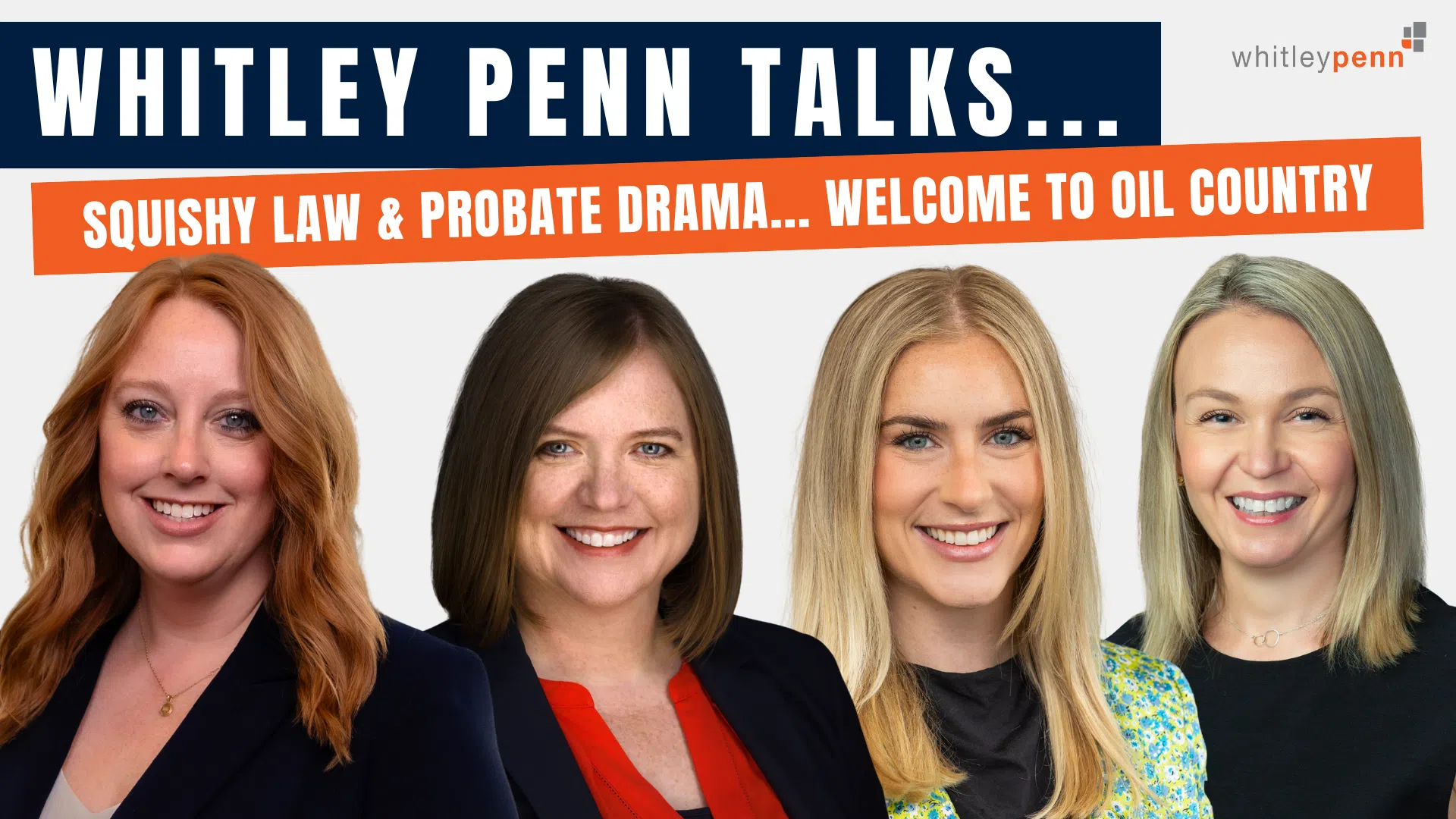
In this episode you will hear:
- How a major Supreme Court decision reshaped jurisdiction and risk in Oklahoma’s oil & gas industry
- What title attorneys really look for, and why affidavits of heirship can create major surprises
- A real‑life mineral ownership story that takes an unexpected turn
Listen to this episode on Spotify or Apple Podcasts. Click here to view the episode transcript.

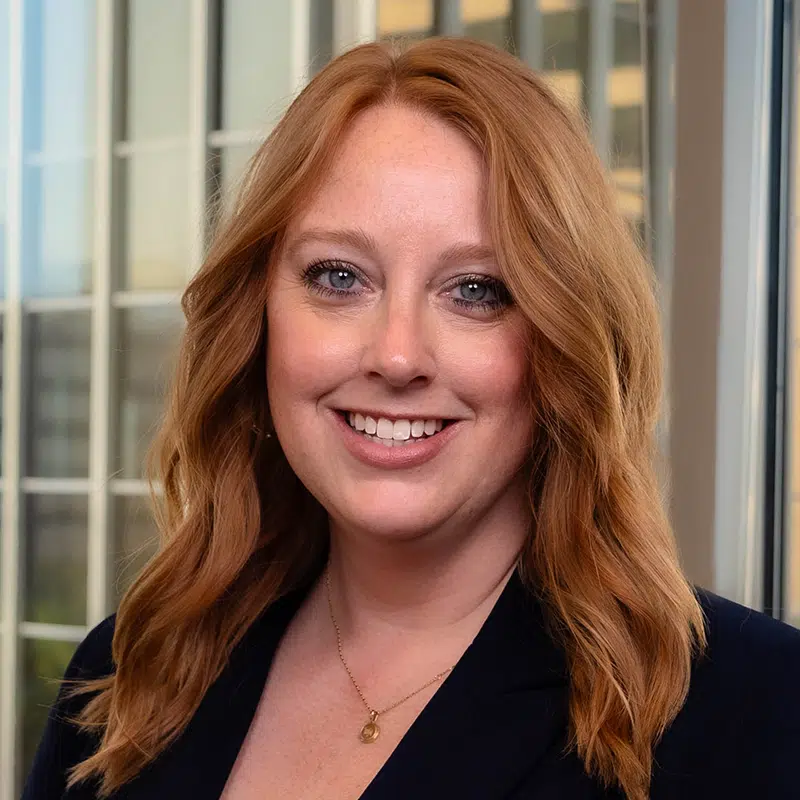

Melissa Gardner
Senior Attorney, Ball Morse Lowe
01/29/2026
In this episode of A Crude Bit of Humor, Buffie and Coby sit down with attorney Melissa Gardner to explore how major legal decisions, title opinions, and real‑world mineral ownership challenges shape today’s oil & gas landscape. From Oklahoma and Texas jurisdiction questions to surprising situations that land on a title attorney’s desk, this conversation highlights the unique risks and realities faced across the industry.
In this episode you will hear:
- How a major Supreme Court decision reshaped jurisdiction and risk in Oklahoma’s oil & gas industry
- What title attorneys really look for, and why affidavits of heirship can create major surprises
- A real‑life mineral ownership story that takes an unexpected turn
Listen to this episode on Spotify or Apple Podcasts. Click here to view the episode transcript.


Coby Nathanson
Senior Manager – Land Administration
Buffie Campbell
Managing Director – Mineral Management
Melissa Gardner
Senior Attorney, Ball Morse Lowe

Get new episodes straight to your inbox
Get new episodes straight to your inbox
You might also enjoy...
Episode Transcript
Kendall Neukomm (00:00)
Hello everyone, and welcome to Whitley Penn Talks where we give you valuable insights and help you make confident informed decisions to move your business forward. My name is Kendall Neucomm and today we are back with a crude bit of humor. I think this is episode four if I’m not mistaken, maybe five, but we’re excited to be back today. So I’ve got Buffie Campbell and Coby Nathanson back, our hosts of crude bit of humor. And we have a special guest today, Melissa Gardner. Welcome Melissa.
Melissa Gardner (03:53)
Thanks, thanks for having me.
Buffie Campbell (03:53)
Yay!
Kendall Neukomm (03:56)
Awesome. Well before we get started officially, I know that the listeners know a little bit about Coby and Buffie and their expertise and experience here working at Waley Penn, but Melissa, do you mind sharing a little bit about your background and what you do day to day?
Melissa Gardner (04:08)
Sure. Sure.
I was born and raised here in Oklahoma and because of that, I guess I decided when I went to law school, I would go into oil and gas. So I’m embarrassed to tell you that my career is now old enough to vote. I’ve been doing this for about 18 and a half years and I’ve done title work mostly. I do some transactional work, do some litigation assistance, but mostly focused on title issues. I know everyone’s on the edge of their seat now and can’t wait for the rest of the episode.
I went to school at Oklahoma State University and then went to law school at Georgetown and moved back and started my career at Chesapeake in-house with an oil and gas company. ⁓ I’ve been in private practice now since 2013. So for 12 years, I’ve been in private practice outside of my in-house experience. So that’s about it. I live here in Oklahoma City, love my thunder, love my cowboys. I’m a big athletic supporter because I have absolutely no athletic ability. So it makes me deeply, deeply interested in sports. ⁓ I have a dog that I’m obsessed with. He is ⁓ my pride and joy. So that’s it.
Kendall Neukomm (05:18)
Love it, love it. Well, Melissa, thank you so much for spending some time with us. I’m excited on where we’ll take this conversation today. I was reviewing the questions and there’s some really interesting ones. So I think for those listening, we’re gonna take this conversation a few really fun ways. So we’re excited to dive in..
Buffie Campbell (05:37)
Now, Melissa, you’re licensed in Texas as well, right? Texas and Oklahoma?
Melissa Gardner (05:40)
That’s right. I am licensed in Texas and Oklahoma. I mean, the vast majority of my work is there. I should have mentioned that I work at Ball Morse Lowe now. It’s an oil and gas, a boutique oil and gas firm that’s kind of expanded into some family law as well as some litigation transactional work. But I just, as of eight days ago, I’m a senior attorney here. So again, you guys are catching me at the right time.
Yeah, but our firm does work in Oklahoma, Texas, the Rockies, just about anywhere that you guys might need help with oil and gas or family law, probate, that kind of stuff.
Buffie Campbell (06:09)
Okay, because I think we’re going to go into some Oklahoma and Texas laws today. So I wanted to make sure we’re all good.
Melissa Gardner (06:19)
I love ⁓ it. I almost moved my Texas license so that you guys didn’t see it in the video, but it’s right behind me. I was like, I need to show my bona fides here. So here you go.
Kendall Neukomm (06:29)
Love it. Well, before we officially dive in with our questions that we’ll get to here in a second, if anyone out there is listening, I would encourage you to listen to episodes one, two, and three of Crude Bit of Humor. Obviously not required to listen to today’s episode, but encouraged. You can listen to them before or after just the same. Lots of fun things are coming with the series, so we don’t want anyone to miss out and make sure that you keep up with what Buffie and Coby are doing as we proceed this new year. ⁓
As we get into it, I have a question for Melissa to kind of kick things off. A few years ago, you did a presentation about the Supreme Court decision that concerned tribal lands in Oklahoma. Can you give us a bit of a summary of your findings and if there’s any updates on this case since?
Melissa Gardner (07:16)
Sure. ⁓ Every answer I’m going give you is going to sound so much like a lawyer and I apologize in advance for that. But this is one of those situations that I can’t answer except to say that there are lots of questions and not lots of answers. ⁓ It is Oklahoma law. ⁓ As most of you probably know, Oklahoma started out as Indian territory and we are the only state in the union that has that distinction. I don’t know if it’s a distinction that we were at the end of the Trail of Tears, but there you go.
So it was the United States Court case and I would argue actually does affect more than just Oklahoma, but it obviously the topic of the case was Oklahoma law. So the McGirt case involved oddly enough a criminal action. So I would tell you that I have actively in my almost 19 year career tried to avoid criminal law and yet somehow it ended up on my doorstep. There was a question about a Native American tribal member who committed a crime, a pretty heinous crime if we’re being honest, on tribal lands.
And he had appealed his case up through the United States Supreme Court because he said he should not have been tried under the Oklahoma Major Crimes Act. He didn’t say he was innocent, he didn’t say this evidence is wrong, he didn’t say I didn’t commit this crime. He said I should not have been tried under this law because where I committed the crime and me personally, I am not subject to the jurisdiction of the state of Oklahoma. He said I should have been tried under the federal major crimes act, the major crime act of the United States of America, not of the state of Oklahoma. And everybody might ask, that’s a really strange thing to spend that much time and money on, right?
Kendall Neukomm (08:48)
Mmm.
Buffie Campbell (08:52)
Talk about a loophole, right?
Kendall Neukomm (08:56)
Right, to increase your chances.
Buffie Campbell (08:58)
Yeah.
Melissa Gardner (09:00)
You would think, I think I would rather be tried under state law than federal law. I hope I’ve never tried under any law. That’s a weird thing to say. He had nothing to lose. But really the distinction is Oklahoma has the death penalty. The Federal Major Crimes Act does not. So that was why he was pushing so hard for it. I don’t think he understood what the ramifications of his appeal were going to be. But Justice Gersuch, who was in Colorado on the United States District Court was elevated to a Supreme Court justice. And he wrote the opinion – every time I give a presentation about this, if any of you have seen me give this presentation, I always get emotional when I think about his introduction to the United States Supreme Court opinion. Because he said, at the end of the Trail of Tears, a promise was made to the tribes. And I have seen no evidence that we should now be breaking that promise.
It’s a pretty, again, that doesn’t seem to speak to a major crimes act issue or a violent crime criminal situation. It was a much broader decision, I would argue. Some people disagree, but I think if you read the opinion, ⁓ the opinion just states that these federal reserve lands that were established when Oklahoma was given to the tribes have never been officially disestablished. So, the United States Supreme Court said, are correct, sir, Mr. Criminal. You are correct. You should have been tried under the Federal Major Crimes Act because Oklahoma does not have jurisdiction over you personally because you’re a member of a tribe. And because the crime occurred on what was an established reservation that had never been disestablished. That term disestablished was used a lot in the appeals and all the work that was done at the Supreme Court.
So anyway, again, why would that matter to oil and gas? Why would that matter to your listeners? Why would that matter to your clients or customers? It is because if it is true that those reservation lands are not subject to Oklahoma criminal law, do you know what else they’re not subject to? Any Oklahoma law. They aren’t subject to the Oklahoma Tax Commission. If it’s a tribal member on tribal lands, we can’t require the cars to have Oklahoma license plates. I mean, it is vast and varied, the amount of effect or the impact of this decision, I would argue. And in fact, oddly enough, I don’t need to be critical of my home state, which I adore, but their briefs to the United States Supreme Court were not so much like this is wrong and these reservations have been disestablished. If you read their briefs, it was, if you decide for this man, it will be utter chaos in the state of Oklahoma.
Buffie Campbell (11:25)
Bye, everybody.
Melissa Gardner (11:51)
Like they understood that if this law didn’t apply, then we had no basis for any kind of law to apply.
Kendall Neukomm (11:53)
Mm-hmm.
Coby Nathanson (11:58)
So that’s super interesting to me. This is like the one thing I can jump in on, because I read a book. Listen, I was like a stupid young undergrad, and I read, what was it, that judicial minimalism book by Cass Sunstein. Guys, it’s like the one thing I know about actual legal stuff.
Melissa Gardner (13:34)
That’s funny that you say that, Coby, because the governor, after that decision came down, issued a directive to all the state agencies and said, I need you to give me a report on what you think the impact of the McGirt decision is gonna be on your operations. If you guys could have seen those responses, I mean, they’re public, you should Google them, because some of them are like, we don’t actually know. Like, we have no idea. And some of them were like, it could be a very small, narrowly tailored, to your point, Coby, like narrowly tailored decision that doesn’t affect us, or it could mean we can’t operate. I mean, the Corporation Commission to the oil and gas portion of it all said it is very possible that taken to its logical conclusion, this means we can’t have drilling and spacing units in the eastern one-third of the state of Oklahoma, that we can’t have forced pooling. So all of these wells since the 30s that have been forced pooled under forced pooling laws in the state of Oklahoma are invalid. ⁓ People who own property there might not own it if it had been the result of a tax sale, a tax resale.
And I, as a mineral title attorney, I don’t want to disparage surface title attorneys, but the big joke is they are way more cautious than we are. They are way, way less willing to take a risk than the oil and gas folks. We are called wildcatters for a reason, and not everyone is. And the amount of paperwork that came out of title insurance companies and surface mortgage companies was astounding. So it was pretty widespread.
Buffie Campbell (14:49)
Mm-hmm. Right. And we already signed 400 documents when it comes to a mortgage. So can you even imagine? I can’t even imagine what that turned into. But I think this is absolutely fascinating. So where does it go now? Do you all have any still questions at this point?
Melissa Gardner (15:17)
Great question.
So, ⁓ I’m sorry, go ahead Kendle.
Kendall Neukomm (15:19)
Well, to interject one thing for our listeners and selfishly for myself, what did this just happen in 2025 or what’s the year that we’re looking at here?
Melissa Gardner (15:29)
Great question. So I know everyone here is a giant Supreme Court nerd like myself. What actually happened was this is one of the only cases I am familiar with. I’m sure it’s happened before, but I am not familiar. They actually heard oral arguments one year and the decision was issued the next term. So it’s one of the first times that you will have a break like that. Part of the reason was there was a case before the Supreme Court that involved this issue. They had a split decision because Justice Gursuch that I mentioned earlier, he had to recuse himself because he was one that decided the lower appellate decision. so he couldn’t, so it was instead of our nine person, it was eight and it was a four four decision. So they ended up not hearing that case. Another almost identical case, that was the Sharp case. The McGirt case is almost identical in all of its facts to the Sharp case. So that came before them again, they had to re-brief, they did more oral arguments and decided both cases together in 2020. So oral arguments started in the 2019 term, but the decision was issued in 2020.
Kendall Neukomm (16:01)
Mm-hmm.
Okay.
Buffie Campbell (16:29)
So it’s been established for a hot minute. And in the oil and gas world, it affects, from what I read, about 19 million acres.
Melissa Gardner (16:37)
Yeah, so the good news – I don’t know if this is good news or not, the comforting news is that the vast majority of operations in Oklahoma is in the western two thirds. Like the stuff that ⁓ you hear about those big booms, that you hear about the scoop play, all of that stuff is mostly in the western two thirds of the state. So this didn’t affect your big time operators to the same extent as it would have if it affected more, like the entire state of Oklahoma. If you look at an old map of the state of Oklahoma, that eastern one third, like that involves Tulsa and and abuts Arkansas. That’s where most of the traditional reservations were established. So that’s really what we’re talking about. So again, there is definitely operations there. There are operations in Creek County, there are operations in Osage County, those certainly the million dollar ones, if you’ve read Killers Under the Flower Moon, all that stuff is affected by this.
Kendall Neukomm (17:32)
Okay.
Melissa Gardner (17:33)
You don’t want me to go into the details of why Osage County isn’t. There was a federal statute that disestablished the Osage reservation many, many years ago. So that’s actually excluded from the McGirt decision because it had been disestablished. Oddly enough, McGirt side, the Native American side actually used that as an explanation for why the other reservations had not been disestablished. As I said, there is a lot of evidence that we meant to disestablish the Osage reservation. We don’t have any of that as an evidence for the other five civilized tribes. So yeah.
Buffie Campbell (18:08)
Interesting. So this was even more far reaching than just definitely more than the criminal law, but even more than oil and gas and you know, so interesting.
Melissa Gardner (18:13)
Yeah, yeah, yeah. Well, and to Coby’s point, every decision that we’ve had since then, we haven’t had any super major decisions, but every decision that we’ve had since then has been an effort by the courts and by states and by governments to narrow the effect of it. So any case that comes before them now, they handle on a case by case basis and it’s very narrowly tailored. I don’t think we’re chicken little here and the sky is falling. I mean, I don’t think that that’s what’s happening. But I do think that it is a perfect example of how we all, like it takes a village, right?
We all have to figure this stuff out together. I need to be concerned about water law, even though I practice oil and gas. You guys need to be concerned about some criminal cases, even though that’s obviously not part of what you guys do on a day-to-day basis.
Coby Nathanson (19:03)
You know, and I think the other thing that’s that’s fascinating about it is so when the very short of the backstory is when I started in the industry, ⁓ the the guy that I reported to old school litigator and I remember having conversations with him about like equity, anything doesn’t matter. Like I want black letter law. I don’t want unjust enrichment. I don’t want any of that. Sorry. Unjust enrichment is kind of this concept that it’s like you’ve been benefiting from it for a while.
Melissa Gardner (19:20)
Yep. Yep. That’s exactly right. Yep.
Coby Nathanson (19:32)
It’s not neccessarily a black or white thing. We don’t, especially under a litigator, we don’t like squishy law. And especially for like the division order stuff. And I know the stuff that Buffy does in ⁓ mineral management, it’s very black or white, right? It is or it isn’t, period, stop. And then when, yes, you sound like you.
Melissa Gardner (19:35)
We call that squishy law instead of hard law. For my clients and for your clients, predictability is the name of the game, man. Like I need to know what risks I’m facing. Like that is my entire job, is explaining risks, finding risks my client didn’t know about, explaining them and then telling them how to avoid them. And if everything is squishy, I can’t do that.
Buffie Campbell (20:11)
Right. And no one’s gonna want to sell a house or drill a well or build a business somewhere if they don’t know that expectation. So yeah, it’s pretty important. Did this case affect any actual oil and gas leases that you had worked on or anything that was pending for you?
Melissa Gardner (20:23)
That’s right. That’s right. I would tell you the only thing that it changed was maybe my client’s risk tolerance. There might have been some wells that have been proposed in that area or some ⁓ package that they were thinking about purchasing that maybe they made a different risk profile ⁓ because of it. I don’t know that it affected any, not that I have seen, and I think that that would be pretty heavily publicized if it were. So I feel pretty comfortable saying it was mostly about risk tolerance was the difference. And I will also tell you, I think this is 100 % my opinion. This is not the opinion of my firm or really any other attorneys that I’ve talked to about it. In my opinion, the biggest impact is that it switched the leverage when it comes to politicking in the state of Oklahoma to the tribes. The tribes are the largest lobbying group in the state of Oklahoma. They have been for a while. This was just a shot in the arm for their lobbying. I have not seen any tribes indicate that they don’t want oil and gas production on their lands.
They benefit from it. They enjoy working. I mean, I would tell you all of my clients have enjoyed a good relationship with the tribes way before the McGirt opinion and will continue to. They acknowledge how important a relationship with the tribes are. This just kind of switched, like gave them a shot in the arm for the leverage piece. So again, we had a Supreme Court case a couple of years ago. I won’t go into it, but they decided that water that resided on reservations belonged to the tribes. And it was water that the state had been using for a long time.
We didn’t stop using that water. We just started paying the tribes and paying them better. So I think again, 100 % my personal opinion, I think that’s what the outcome of this will be.
Buffie Campbell (22:17)
Water’s become a big topic. We’ve got that. It’s a major issue in Texas right now. We won’t even go into that, but the fact that you brought it up is like, huge issue.
Coby Nathanson (22:24)
So asking, I guess, a stupid question, because, well, not stupid. I take it back, because my questions aren’t stupid. ⁓ So like, they’re not. So thinking through all of this, I guess comparing the minimalism to maximalism thing, I really like the idea of focusing on the business risk, the risk mitigation, because we’ve talked about it as we’ve gone through some of our podcasts.
Do you think are we seeing that maybe the federal government is reacting to that in a different way and saying, okay, in this situation, we’re not 100 % confident what it’s gonna be with tribal lands. Therefore, because we don’t necessarily have as much control over tribal lands, we might open up more on the BLM side and make more federal reserves available. So we have this kind of dichotomy of the left wanting to preserve, know, let’s say, is it Denali or I have no idea what it is today. ⁓ But then potentially. Yes, it’s the Gulf of Mexico. It’s fine. It’s all of the above. But if we if we are potentially taking away the ability to drill on tribal lands and the rules are no longer the same.
Melissa Gardner (23:25)
Yeah. Yeah, Not like McKinley and Denali, are the same, right? Yeah, yeah.
Buffie Campbell (23:28)
Yeah, yeah.
Melissa Gardner (23:34)
Yeah, sure, sure, sure, sure.
Coby Nathanson (23:48)
Is it possible that the federal government will overcompensate, overcompensate in air quotes, and open up more federal land to make that available to oil and gas operators? Let’s, I guess, call it the super majors, because it’s really the super majors that I think are going to take on the risk to drill on federally protected lands.
Melissa Gardner (24:02)
Sure. Sure. Sure. All right, that that could be, but if you just want my personal opinion. Number one, I haven’t seen a ton of reports and the idea that production went down after McGirt. Again, I would tell you the risk profile maybe looks different, but I haven’t seen a drop in production since then, or even really a drop in production in the state of Oklahoma. Now, I haven’t seen it broken down in between the eastern third and the western third. Like I haven’t seen those numbers. The other thing that I will tell you is that I think that the push to drill on federal lands came before McGirt.
It’s probably been more successful since McGirt. So maybe you’re right. Maybe that leverage did cause some people to support it that hadn’t supported it before or got it rolling down that hill faster than it would have previously. But that idea has existed. I mean, that was something, again, that the Trump administration ran on the first time, and that happened pre-Migrant. So I don’t know.
It might have changed some of the dynamics, but it wasn’t like, ⁓ now we have to find a place to replace this production. haven’t seen… I could be wrong. I’m not a petroleum engineer, but I haven’t seen..
Kendall Neukomm (25:19)
Man, well, I’m, yeah. Well, I’m sure ⁓ there will still be continued implications as the years proceed ⁓ with this case, but thank you, Melissa, for giving us kind of some insight behind the scenes there on ⁓ some of the details behind the McGirt case and the McGirt hearing. will keep up with it for sure moving forward and see kind of what additional implications come to be. ⁓
Coby Nathanson (25:20)
That’s a Q4 goal for our thing.
Melissa Gardner (25:22)
Hahaha!
Buffie Campbell (25:22)
Yes.
Melissa Gardner (25:44)
Absolutely.
Kendall Neukomm (29:27)
Kind of just fully pivoting here, ⁓ Melissa, the next kind of question that we had planned for you was when we’re thinking about an heir being disclaimed, that’s not necessarily a term that I, marketing senior manager, am familiar with. So tell us a little bit more about what that means in your line of work and give us an example of that happening ⁓ in a case that you’ve seen.
Melissa Gardner (29:50)
I’m so excited about this question. It’s one of my favorite stories. When people tell me that title attorneys are boring, this story is what I like to tell them. But before I get to that story, I will tell you, we see that in a lot of different ways in title. That can be, I mean, most people think of probably a will or a state planning when they talk about an heir being disclaimed. The rule of thumb for us and Buffie and Coby, you guys speak up if you disagree, is that if you are intending to disclaim someone, you need to state it outright. You can’t say I have four kids and I’m only naming three in the will. You need to say, I acknowledge the fourth child, I leave them one dollar. I acknowledge the fourth child I provided for them during their life. Like whatever, you don’t have to justify why you’re doing it, but you do have to acknowledge. I’m sorry.
Buffie Campbell (30:43)
100 %! Yeah, when you call out that fourth child for being a bad fourth child, yes. Love it.
Melissa Gardner (30:46)
Yep. for being the person, the subject of the McGirt opinion, then you really do kind of explain it’s less likely that people are gonna challenge it, right? So that can look like that in a probate, it can look like that in a will. The other ways that it looks like that in my line of work, and honestly probably are more common, is that it looks like I’m gonna do a transfer on death deed to two of my kids. That’s a lot less likely to be challenged. You don’t have to name your other heirs, you don’t have to explain why you’re doing it. ⁓
Kendall Neukomm (31:09)
Yeah.
Melissa Gardner (31:18)
Reserving a life estate while conveying your stuff to your kids Putting your kids as a beneficiary of a trust putting only two of the three of them as the beneficiaries of your trust things like that are way less likely to cause an uproar or questions when it comes to title than actually affirmatively disclaiming an error in your will in my experience, ⁓ The story actually comes from not a will at all, but from an affidavit of death and heirship. How much headache do you guys have from affidavits of death and heirship on a scale of one to ten.
So that’s a problem in Oklahoma, that’s a problem in Texas. My favorite story of all time is that I had a client I did a title opinion for. I held the interest in the suspense of this father’s estate where there was an affidavit of death and heirship. Affidavit of death and heirship said that he had four children, one of them predeceased him, and he had a wife who predeceased him. So I had written this comment and requirement and I had held the interest up in suspense for lots of reasons, but there wasn’t enough information in the affidavit, right? It wasn’t statutory.
I didn’t feel comfortable. It felt squishy. I didn’t want to do that. ⁓ Not only do I help my clients identify risk, but I identify risks for myself. And that was one. And so I was like, no, I want them to know what’s going on. So my client called me. I’ve been working with him for a while and he’d never done this. He said, I don’t think I’ve ever done this before. But this woman, this mineral owner keeps calling me. She’s calling me like three and four times a day. She wants me to release these suspended funds. I keep trying to explain to her why we’re not releasing them. I’ve sent her your comment and requirement. Would you be willing to get on the phone with her? He said, I don’t think I’ve ever asked you to do that. I I’m happy to. I can’t, I have to have all the caveats that I’m not her attorney. She should give her own attorney, like all that stuff, but I’m happy if she has questions. So she calls me and she’s like, well, what do you need? Why don’t we have our money? This is dad’s money. He was getting the money. Why aren’t we getting the money? And I was like, well, first of all, you have a brother who is pretty deceased to you, but you don’t put it how old he was at the time of his death. You don’t put if he has any errors, because that can really make a difference when then test date, succession. And she, was a very tragic story. The brother had died really young.
One of the family members I think had backed into him in the driveway. He was on his bicycle. It was a really tragic story. And so she was like that was years ago. I don’t have anything. And I said, I actually think I could advise my client to waive that portion of the requirement if you could just send me his obituary or something that showed that he was like eight when he passed. You know what I mean? Again, the risk is still there, but it greatly reduces it. I like to talk to my clients about a spectrum of risk. That’s way low on the spectrum of risk, right? Versus something else.
And so she did, she sent me a newspaper article and I was like, okay, thank you so much. That’s super helpful. And then I said, well, you don’t have anything about your mother’s death.
And she’s like, well, I don’t have the death certificate my siblings do, and I don’t talk to my siblings. And I’m like, OK, that’s fine. But do you have, again, a program from her funeral, ⁓ obituary from the newspaper, like anything. We can’t find anything. And she’s like, I’ll get it to you. I’ll get you. She starts calling me like three or four times a day without providing me this information. And finally, one day on the phone, she starts laughing. And she says, I swear to you guys, verbatim, you caught me, mom’s still alive.
And I was like, huh. And she said, but she was horrible to my dad. She should not have access to this money. She does not deserve this money. And I was like, okay, great, great, great. Well, I’m gonna need to let you go. I hang up the phone immediately, call my client, and I’m like, anything to do with this family, you hold in suspense until there’s like a court order, man. Like you turn and run and don’t answer her phone calls. That’s the only time anything like that has ever happened to me. But there you go. There’s disclaiming an error in a way that is probably not gonna be held up in court.
Buffie Campbell (35:00)
Let me, with that, since there was a filed affidavit of heirship, did you then have to file something or did something have to be filed to correct, edit, replace, whatever that affidavit?
Melissa Gardner (35:13)
So if I’ve been representing anyone who owned minerals in that section, I would have recommended they do that. But since I was representing the operator, I don’t mean this to be flippant, Buffie. I really don’t. But like, it wasn’t their business.
Melissa Gardner (35:26)
Like if they’re gonna hold it in suspense, they’re not gonna pay on that affidavit. To be really frank with you, the way that Oklahoma state law stands right now, if that affidavit had been a record for 10 years without anyone contradicting it, they could have paid out on that affidavit. Except if I remember correctly, now this was a few years ago, I actually can go that affidavit wasn’t, like I said, statutorily sufficient, so that 10-year bar wouldn’t have provided the protection. But if it had been statutorily sufficient and incorrect, my client would have had zero risk relying on it, even though it was completely inaccurate. Which is why I don’t like affidavits of death and airship.
Buffie Campbell (36:01)
Wow. relying back on those ancient documents coming into that 10-year plan. Wow. Well, and one more thing, just before you had mentioned that you were writing this on behalf of a client, this is a title opinion. I just want to make sure that any listeners here understand what the title opinions are and kind of what that role is in our industry here.
Melissa Gardner (36:12)
I’m telling ya.
Sure. So the way that we look at our job, and I guess I should say the way I look at our job, I really should, I should couch that, this is just my opinion, is that my entire job, a lot of clients feel like my job is to tell them who owns the minerals and leasehold and burdens on an area that they’re gonna drill, a unit or an area of mutual interest or anything like that. ⁓
I think that is part of my job, but I think that is only a part of my job. I think my job is to tell them who we think owns it, who owns it of record, who has filed documents, who’s claiming an interest. But we also have a job to explain to them the risks that they might encounter when they’re drilling a well. Like that, for instance. I think it’s pretty safe to say that that man’s family owned those minerals.
I still need to explain to my client that they’re taking a risk by paying that man’s family for those minerals. So we need to look at the entire picture instead of like a forest for the trees kind of thing, right? We can’t just look at the instruments. We have to look at people that are claiming. Why are they claiming? They might be a total stranger and they might not own anything, but I’m need to take a step back and be like, why do they think they own something?
And especially if it’s another oil and gas company that’s really well respected in the industry. If it’s someone, a player in Oklahoma or Texas that I know owns a lot of minerals or is a wise and established party, why are they making this claim?
From a legal perspective and from a technical specific perspective, they might not own it, but I think I owe it to my client to help explain why they’re claiming it. So that’s what a title opinion does. It tells you who owns something. It tells you the risks you might run into. And the final piece is I would like to, I talked about that spectrum of risk. I would like to explain to my clients how to get off the spectrum of risk totally. How do you 100 % avoid risk? That is impractical and impossible.
My job mostly is how do we make the spectrum of risk go from 20 gauge to I don’t want to say gauges because I don’t know anything about guns or needles but to go from really wide to like ocean wide to like river or creek wide, right? Like how do we mitigate it as much as we can if we’re not able to get rid of it? ⁓ And that airship situation you get a probate that totally removes the risk but in a situation where an oil and gas company went out of business in the 40s or 50s owning leasehold, I can’t get a correction assignment or a stipulation for that company that hasn’t existed for decades. So I can do all I can do and then there’s nothing else I can do. And so those are the things that a title opinion provides to a client. The ownership, the risk, and then steps to eliminate or reduce risk.
Kendall Neukomm (40:14)
So Melissa, Buffie, Coby, I know that we’ve got just a lot more that we need to talk about today on some of our questions and getting into more of that risk conversation. And ⁓ I know today, so far we’ve talked through Supreme court decisions, we’ve talked through title opinions, ⁓ and we’ve talked about disclaiming errors and some unique examples there, I would say, but.
So on the next kind of part two of this episode with Melissa today, we are going to start the episode with a little bit of juicy gossip that she’s ⁓ found out in a probate proceeding. So for those listening out there, the next episode, part two, we’ll focus on what that juicy gossip is and that’s where we’ll start the episode. So Melissa, thank you so much for your time today.
For all of those listening if you enjoyed today’s episode be sure to subscribe on YouTube Spotify Apple or listen right on our website at Whitley Penn com slash podcast if you’re interested in receiving future episodes So that part two with the juicy gossip of this series straight to your inbox check the link in the description to sign up for our email list now Thank you again, Buffy Kobe and Melissa. We’ll see you on the next episode of a crude bit of humor.